
How do you learn to sail?
Real paths to start sailing in Mexico without having to buy a boat: dinghy sailing, courses, crewing, racing.
Published: 2023-08-06 · Author: Navegabacalar
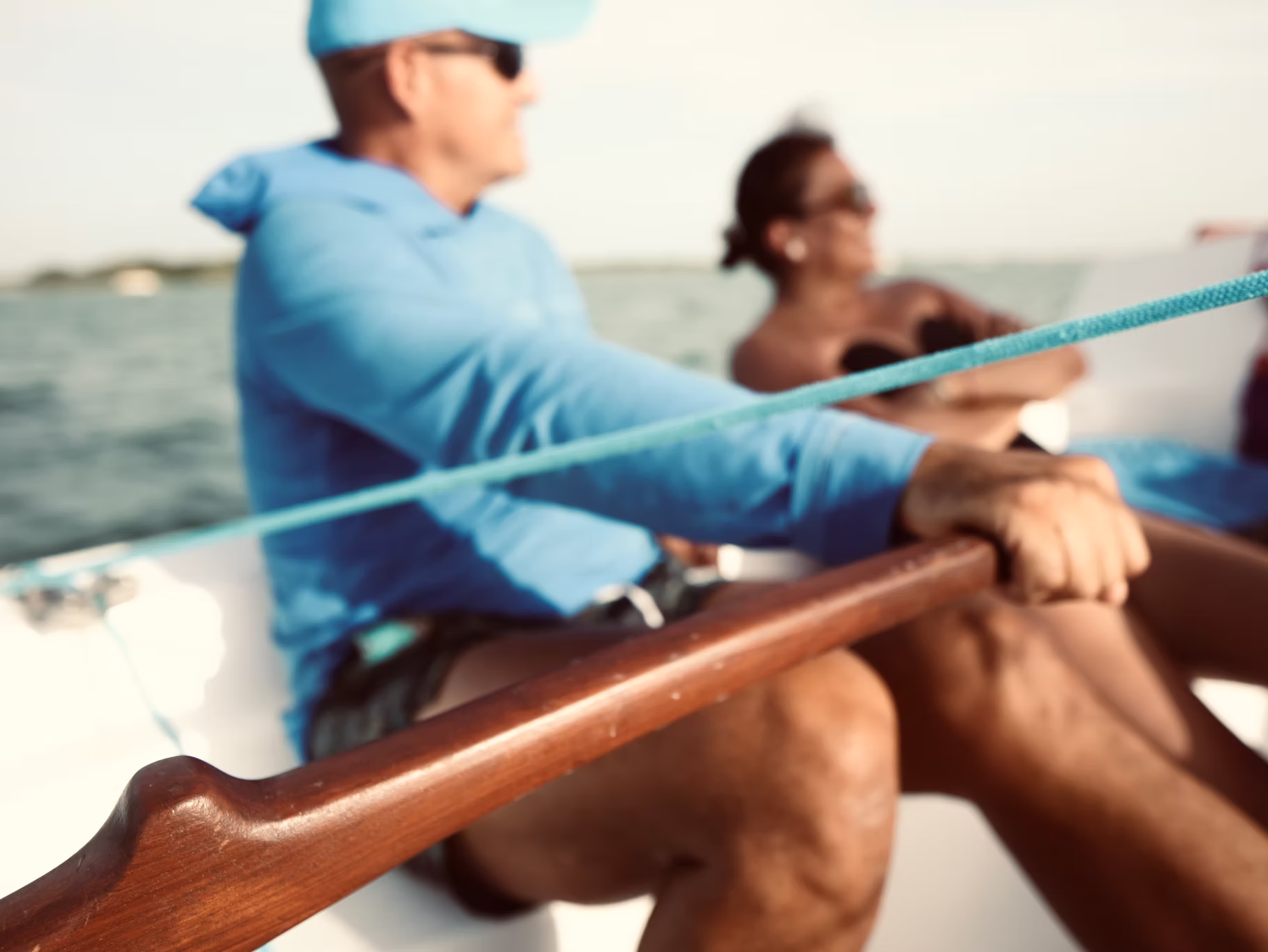
Do you have the desire to learn to sail? Are you excited about a trip with friends or family? Would you like to take up the sport and join races?
There are several ways to get into sailing — some perceived as cheaper than others — and the uncertainty of how and where to start. And, once you've started, how to keep practising and step up to the next level according to your goals.
In this article I'll outline some ways to get started in sailing in Mexico without having to buy a boat — before you even know whether sailing is your sport and lifestyle.
We'll start by answering some of the most common questions people have when they want to begin the sailing adventure.
Can you learn to sail on your own?
Today, thanks to the internet, there are plenty of online courses, YouTube videos and free PDF manuals to download. You can make solid theoretical progress and immerse yourself in the nautical world with all its terminology (specialised sailing names).
For hands-on practice, consider starting on a small boat in a safe stretch of water with no swimmers nearby. Read up on tides, currents and weather before heading out, and make sure an adult who can react to an incident keeps an eye on your route, stays in touch and follows proper safety procedures to avoid accidents.
If you feel a sailing course will help you focus more on learning than on your own safety and that of others around you, find the nearest sailing school that can offer you proper facilities, comfortable and safe boats, and instructors who can certify your progress.
How hard is it to learn to sail?
It depends on your attitude. The basic principles of sailing are simple: a few practice sessions or lessons are enough to move a boat from one place to another. However, the knowledge you need to sail well is built with time and practice. There are plenty of names to read and memorise, and you have to learn to leave the dock — starting in friendly, safe places like a lake or lagoon.
You'll probably feel more confident practising every important aspect of sailing through a structured course. The right move is to find a school that lets you keep practising and review your progress. Even the best sailing course can't prepare you for every condition wind and water will throw at you.
Be aware that every day and every place is different: learning never stops — you'll experience something new every time you sail.
How long does it take to learn to sail?
It depends on the level you want to reach and on your goals. You could learn the basics of how sails work and how the boat moves in just a few afternoons with an instructor — enough to get from point A to point B. But if you want to sail with friends or family safely, you'll need a few months of practice — and easy, regular access to a boat. After that, joining an intermediate or advanced sailing course is hugely helpful to confirm you've progressed well and to get certified.
To move up to the next level you usually have to log a certain number of practice hours. If your school can offer those hours on its own boats, it's well worth using them to reinforce what you've learned.

How do I get started?
If you can already picture what you want and your goal is clear, here are the routes you can take in Mexico to enter the sailing world.
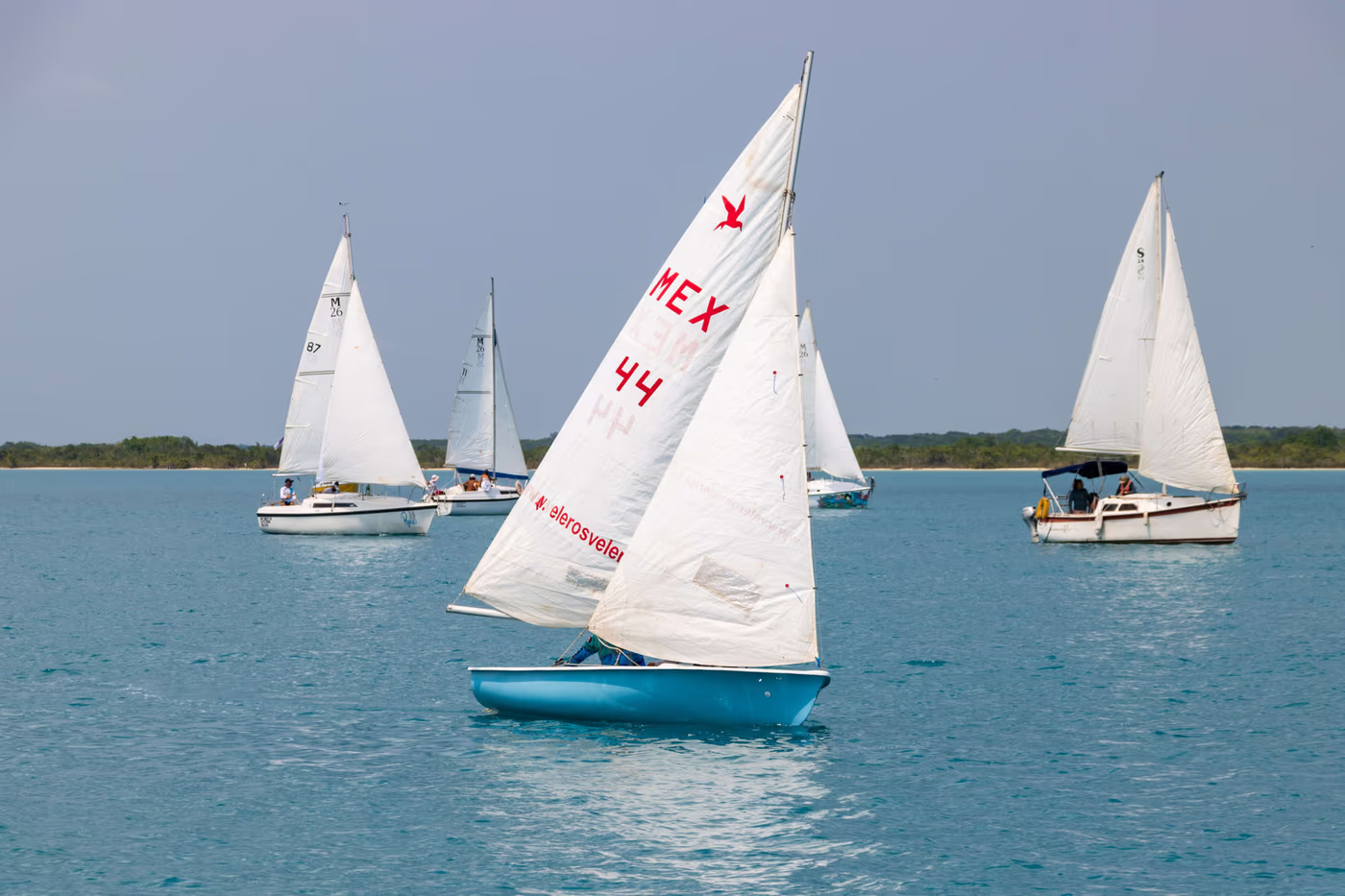
1. Start with dinghy sailing (small monohulls or catamarans)
This is the best way to quickly grasp every fundamental aspect of sailing and how sails work in their different configurations depending on wind direction.
On a dinghy you'll quickly realise that the smallest movement on the tiller and the lightest pull on the sheets gets an immediate response from the boat — so you'll quickly develop a feel for what each control does. You also get a clear sense of your weight on board and an unmistakable response from the boat when it capsizes and you go straight into the water — a great addition to the learning curve.
The advice: watch a few online tutorials, then rent or buy a dinghy, or approach the school of your choice for a dinghy sailing course. This is probably the most affordable course around and, without a major financial commitment, it lets you decide whether this sport is for you.
Tip: sailing clubs usually let you use their boats for a reasonable fee and join local regattas — a great opportunity to practise your new skills.
2. Take a sailing course
Sailing aboard a sailboat is a truly fascinating experience — even more so when you share it with friends and family on holiday, on a weekend, or when you decide to get competitive and race.
Heading out for a morning sail at sunrise is energising; and once the sun is well up, it's tempting to drop the anchor and dive in for a swim. To do that you'll have to leave home early and get the boat to the water with the help of your friends so you can rig it safely and be ready to set sail — or hire a boat instead.
Local sailing schools and yacht clubs are the best place to try these boats. Buying one can be a costly investment, but at a school you can join courses at various levels, expert workshops and regatta events — all of which accelerate your sailing learning. You'll also have the option to rent a boat on the days you fancy a sail.
3. Crew on someone else's boat
If you're not yet in a position to buy a boat, you could crew aboard a friend's sailboat or with a member of a yacht club. That way you find out whether sailing is for you while learning from more experienced sailors.
There are websites dedicated to matching crews with boats. Some skippers enjoy teaching beginners, or need a couple of extra hands to handle a larger boat, or simply have no one to sail with. As a learner, you usually only pay your own costs and chip in for operational expenses like fuel or dock fees. That said, this approach isn't easy to explore in Mexico, so the most reliable route is to join a club.
4. Complete an advanced sailing course
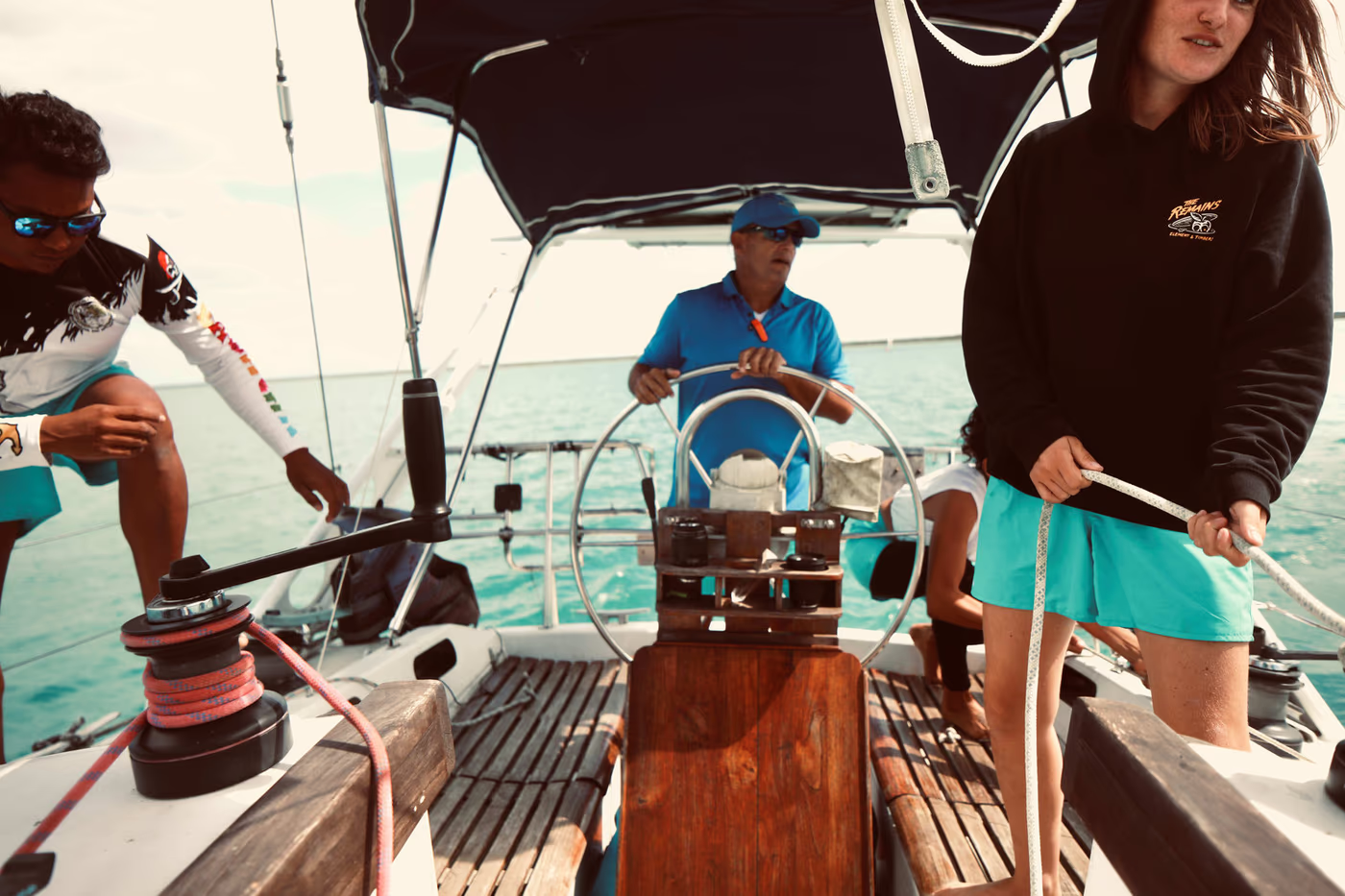
There are very good sailing courses that give you structured teaching with the security of being able to keep stepping up at your own pace and according to your goals. Investing in your learning is a great choice: make the most of your instructor's time by preparing plenty of questions in advance and making sure everything promised in the course outline is actually taught.
In Mexico there are different titles (licences) that let you charter a boat depending on your practice time — the so-called "libretas de mar". Once you hold one of these, you can rent sailboats on your holidays and use your free time to practise your sailing skills.
It's worth saying that no sailing course replaces experience. Sailing a lot, in different conditions and places, will teach you far more than any sailing course can in just a few days.
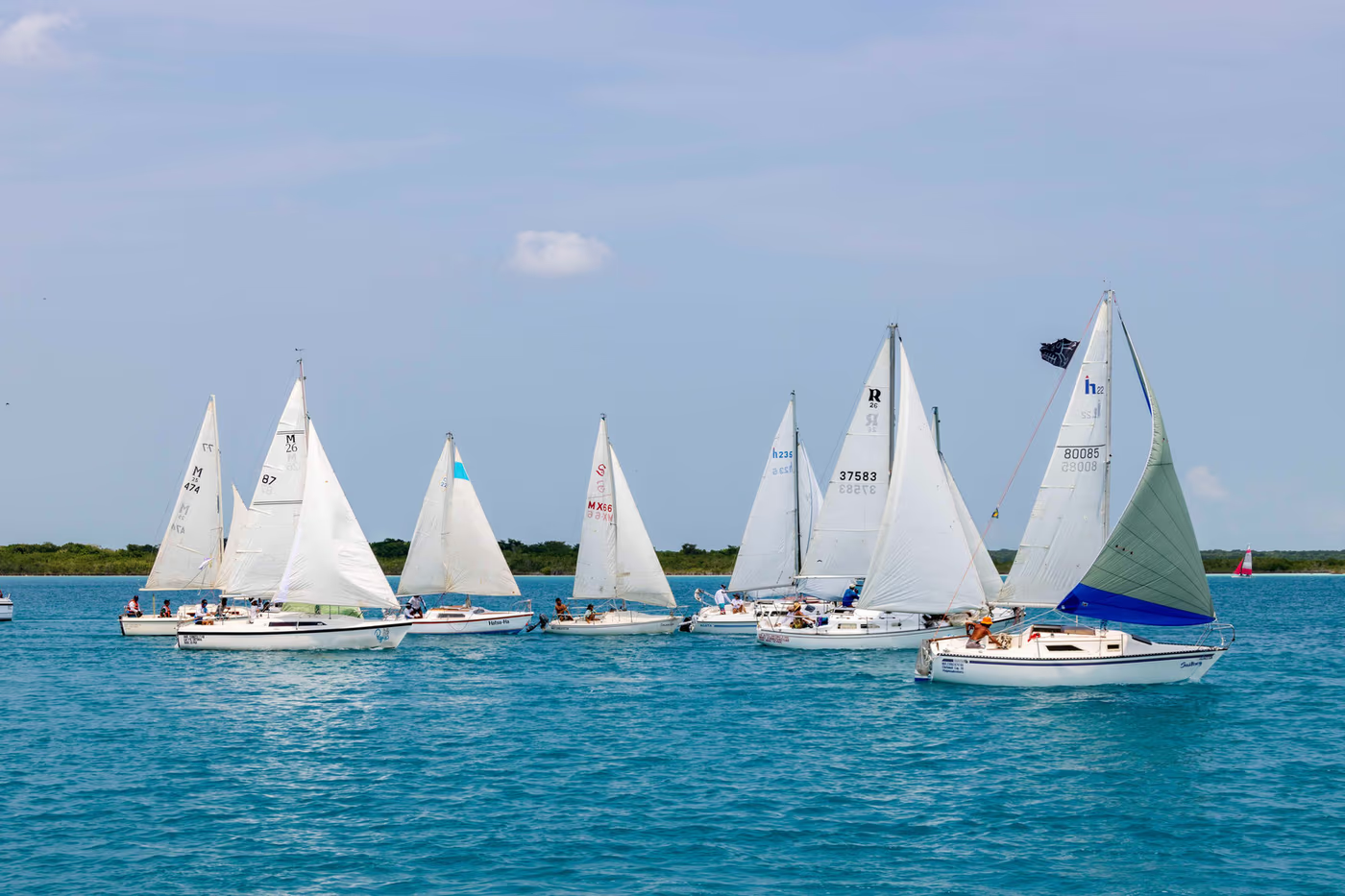
5. Join your local club's regattas
Racing is, without a doubt, a remarkable way to develop your sailing skills: you'll do lots of manoeuvres, you'll be under pressure, and you'll have to get everything right on time.
You can take part by getting a place as crew or by chartering a boat and bringing your own crew along.
Some areas also have regular regatta series. If you can talk to a skipper and show them that you want to learn and are reliable on board, you'll gain access to one of the very best learning resources around.
I hope you find this useful. If you're interested in learning to sail — or if you've already started and want to keep practising — please get in touch.